On this page
What the role involves
The interior department on a yacht is responsible for everything guests experience when they're not on deck. That includes cabin service, laundry, table service, cocktail preparation, provisioning coordination, and on larger yachts, everything from floral arrangements to spa management.
As a junior stewardess, your responsibilities typically include:
- Cabin turnover and cleaning (to an extremely high standard)
- Laundry and linen management — including pressing, folding, and stowage
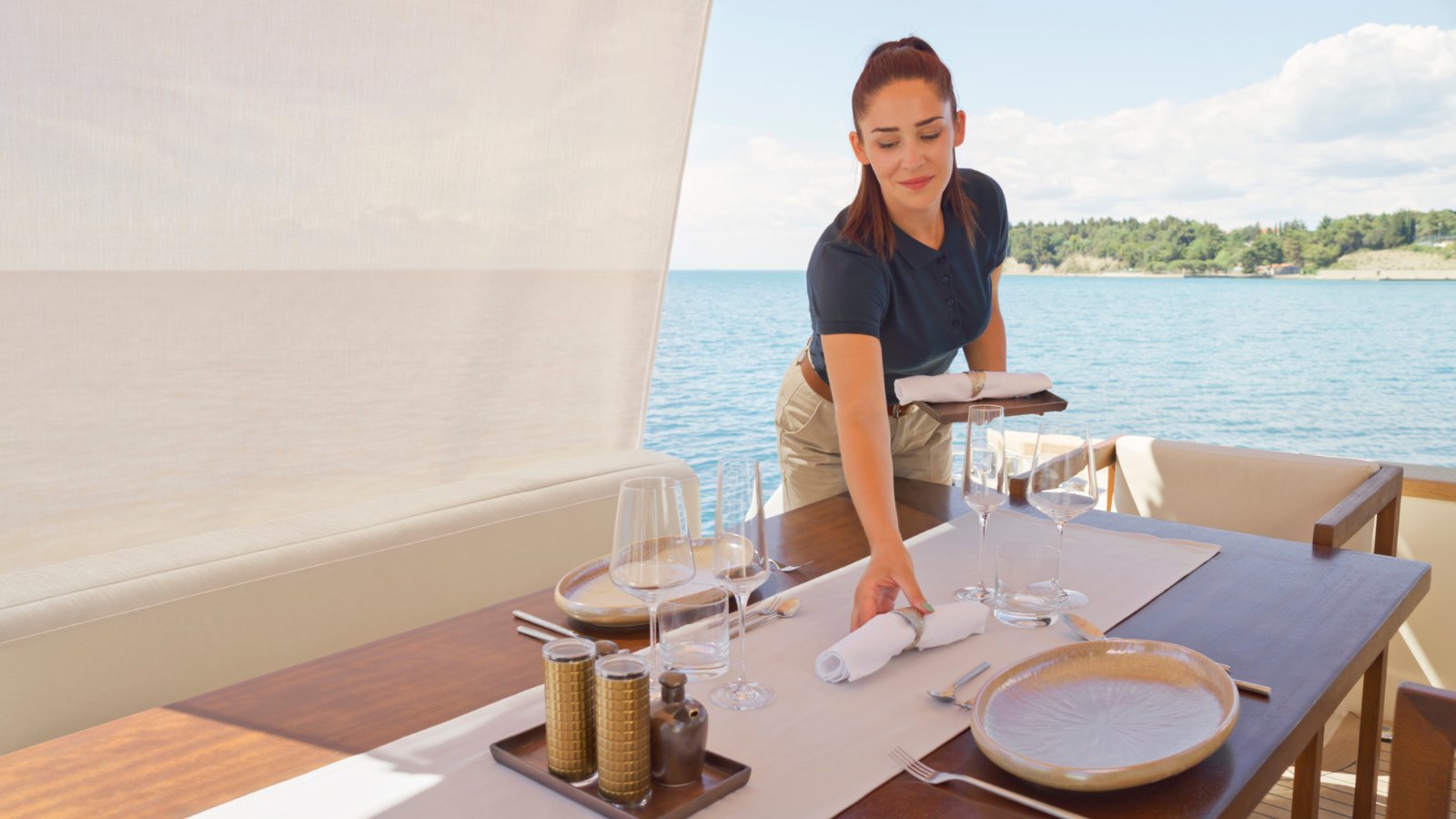
- Table setting and formal meal service
- Bar setup and basic cocktail service
- Assistance with provisioning and stores organisation
- Guest liaison under the direction of the chief stew
On smaller yachts (under 24m), you may also assist on deck when needed — the "deck/stew" role is common at this size. On larger superyachts, departments are more strictly separated.
Qualifications you need
Mandatory (without these, you cannot legally work)
STCW Basic Safety Training — The 5-day safety course covering fire fighting, sea survival, first aid, and personal safety. This is required by international maritime law for anyone working commercially at sea. Cost: approximately £500–750 in the UK, similar in European and US training centres. See our full STCW guide.
ENG1 Medical Certificate — A seafarer fitness certificate confirming you're medically fit to work at sea. Takes about 30 minutes with an approved doctor. Valid for 2 years. See our ENG1 guide.
Very helpful additions
Food Hygiene Certificate (Level 2) — Most chief stews prefer junior interior crew to have at minimum a basic food hygiene qualification. Online Level 2 food hygiene courses are widely available and cost approximately £20-30. Do this before you start dock walking.
WSET Level 2 Award in Wines — The Wine and Spirit Education Trust qualification is increasingly valued on larger yachts where wine service is important. Not essential at entry level, but a genuine differentiator as you progress.
Silver service training — Formal silver service (serving from the left, plated service, etc.) is useful on larger motor yachts with formal dining. Short courses available through various hospitality training providers.
Cocktail/mixology courses — Useful but not essential. Basic bar knowledge is more important than a certificate.
How to get your first job
Most junior stews get their first position through a combination of direct dock walking, crew agencies, and word of mouth. Here's the practical approach:
1. Get your paperwork right first. STCW and ENG1 done, passport valid, CV formatted correctly for the industry. See our crew CV guide.
2. Choose the right location and time. Palma de Mallorca in March-May before the Med season is the classic starting point. Antibes in March-April is also good. Fort Lauderdale from September onward for the Caribbean season.
3. Register with crew agencies. YPI Crew, Faststream Recruitment, EYOS Expeditions, and Luxury Yacht Group are among the well-regarded agencies. Registration is free. Upload your CV and get it updated regularly.
4. Dock walk."> Turn up smartly dressed, CV in hand (or on your phone to send by email), and walk the docks asking if the chief stew or captain is available. Read our full dock walking guide for strategy, etiquette, and what to say.
5. Say yes to day work. A day's paid work on a vessel in port is how many first contracts start. It also gives you direct references and experience on your CV.

A day in the life of a junior stewardess
Guest trip day — typical schedule:
07:00 — Rise, uniform on, crew breakfast. Brief with chief stew on the day's itinerary and any guest preferences.
07:30 — Cabin service. Turn down beds, replenish amenities, ensure guest cabins are spotless before guests surface. Laundry from overnight sorted and started.
08:30 — Lay up for guest breakfast. Set the table, prepare juice, pastries, condiments. Assist with service as guests arrive.
09:30 — Clear breakfast, reset dining area. Assist chef with galley prep if needed. Second cabin pass if guests have vacated.
11:00 — Vessel underway or at anchor. Guest requests field via chief stew. Afternoon table setup begins. Laundry continues.
13:00 — Lunch service. Full table setup, serve, clear, reset. After lunch, brief crew break.
15:00 — Deep cleaning rotations. One cabin always on deep clean schedule even on guest trips. Silverware polished, glassware checked.
18:00 — Guest sunset cocktails setup. Bar ready, snacks prepared, assist with service on deck.
19:30 — Dinner table laid formally. Service during dinner. Clear.
21:30 — Cabin turn-down service. Chocolates on pillows, everything reset for night.
22:00–00:00 — Final checks, late bar as needed. Off watch.
On non-guest days in port, the rhythm is different — deep cleaning, maintenance, provisioning runs, admin. These days feel long too, but differently.
Career progression to chief stew
Interior is one of the clearest career paths in yachting:
| Position | Typical Timeline | Key Progression Points |
|---|---|---|
| Junior Stewardess | Season 1 | STCW, ENG1, food hygiene |
| Stewardess | Season 2–3 | WSET, growing service skills |
| 2nd Stewardess | Season 3–4 | Leadership of junior stew, provisioning management |
| Chief Stewardess | Season 4–6+ | Full interior management, budgeting, hiring junior crew |
The chief stewardess role is a genuine management position — you're responsible for the entire interior department, managing junior crew, owner preferences and preference sheets, provisioning budgets, and the overall guest experience. The best chief stews combine hospitality excellence with organisational and people management skills.
Salary expectations
Salaries in the interior department are competitive, tax-efficient (paid on board, outside most domestic tax jurisdictions), and supplemented by tips on charter yachts.
| Role | Approximate Monthly Salary | Notes |
|---|---|---|
| Junior Stewardess | €1,500 – €2,500 | + accommodation + food + tips |
| Stewardess | €2,200 – €3,200 | Vessel size matters significantly |
| 2nd Stewardess | €2,800 – €3,800 | On larger vessels only |
| Chief Stewardess | €4,000 – €7,000+ | Big variation by vessel size |
For the full breakdown, see our chief stewardess salary guide.
Stewardess essentials
Before you start your first position, a few key items will make your life easier.
Affiliate disclosure: We recommend products we've tested. Amazon affiliate links support this site at no extra cost to you.
- Professional chef's knife roll — For the galley work and provisioning operations you'll assist with
- Quality uniform aprons and whites — Professional food service aprons in black or white
- Wine and spirits handbook — A pocket reference for wine service and spirit types
- Silver service reference guide — Quick reference for formal table service and plating
- Guest service manual — Practical guide to high-end guest service and problem-solving