On this page
What a deckhand actually does
The deck department on a yacht is responsible for everything above the waterline — and a good deal of what's below it too. As a junior deckhand, you're at the bottom of the deck hierarchy but you're also the person who gets the most hands-on time with the yacht itself.
Daily responsibilities typically include:
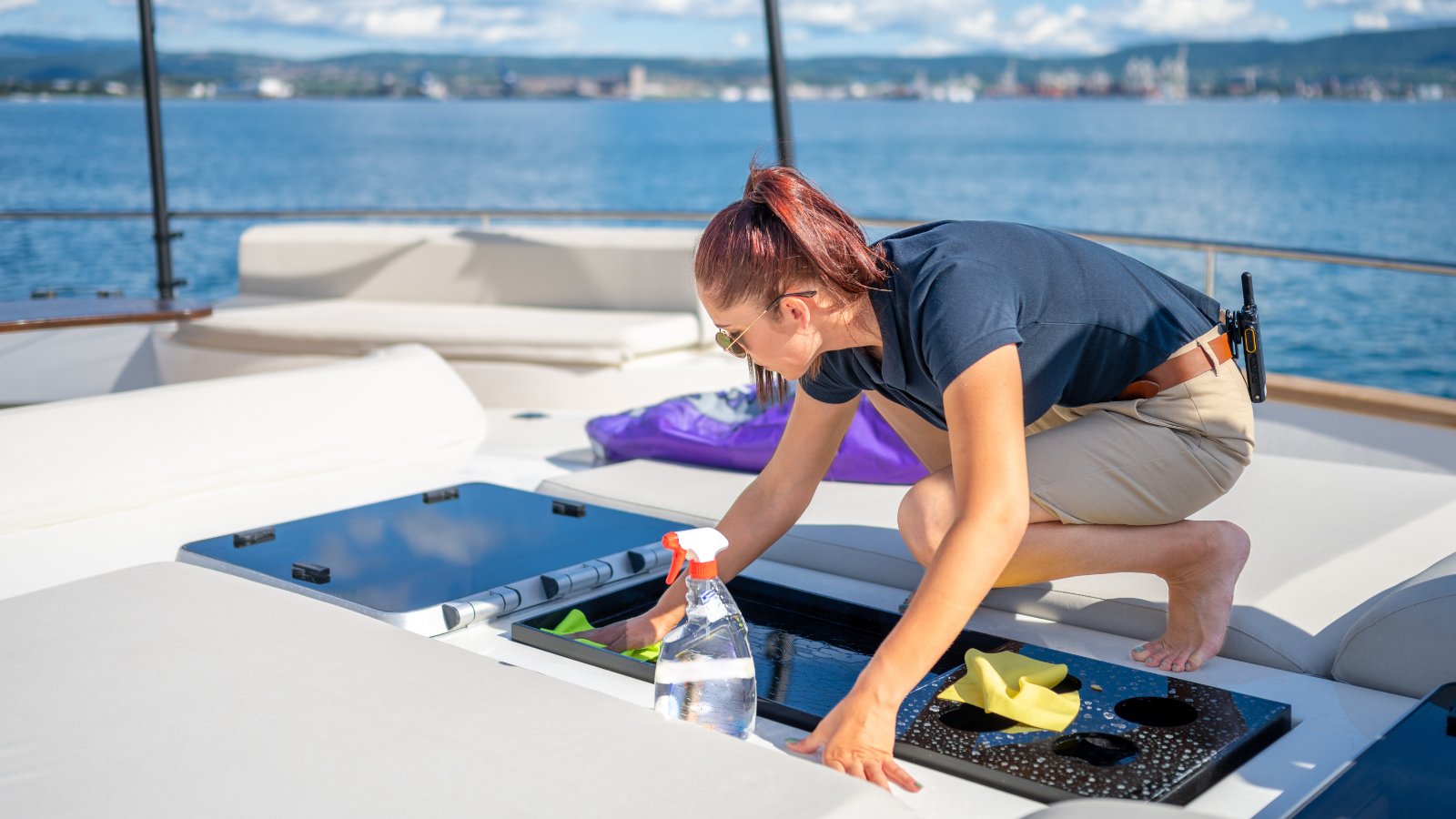
- Washing, polishing, and maintaining the yacht exterior — topsides, stainless steel, windows, decks
- Line handling during docking and undocking (critical — get this right)
- Operating and maintaining tenders (rigid inflatable boats used to get guests ashore)
- Setting up and launching water toys — jet skis, paddleboards, inflatables, water slides
- Anchor watch and anchor handling
- Varnishing, painting, and general maintenance on deck hardware and furniture
- Safety checks — life raft inspections, flare checks, safety equipment maintenance
- Watches underway (on larger vessels)
Physical requirements
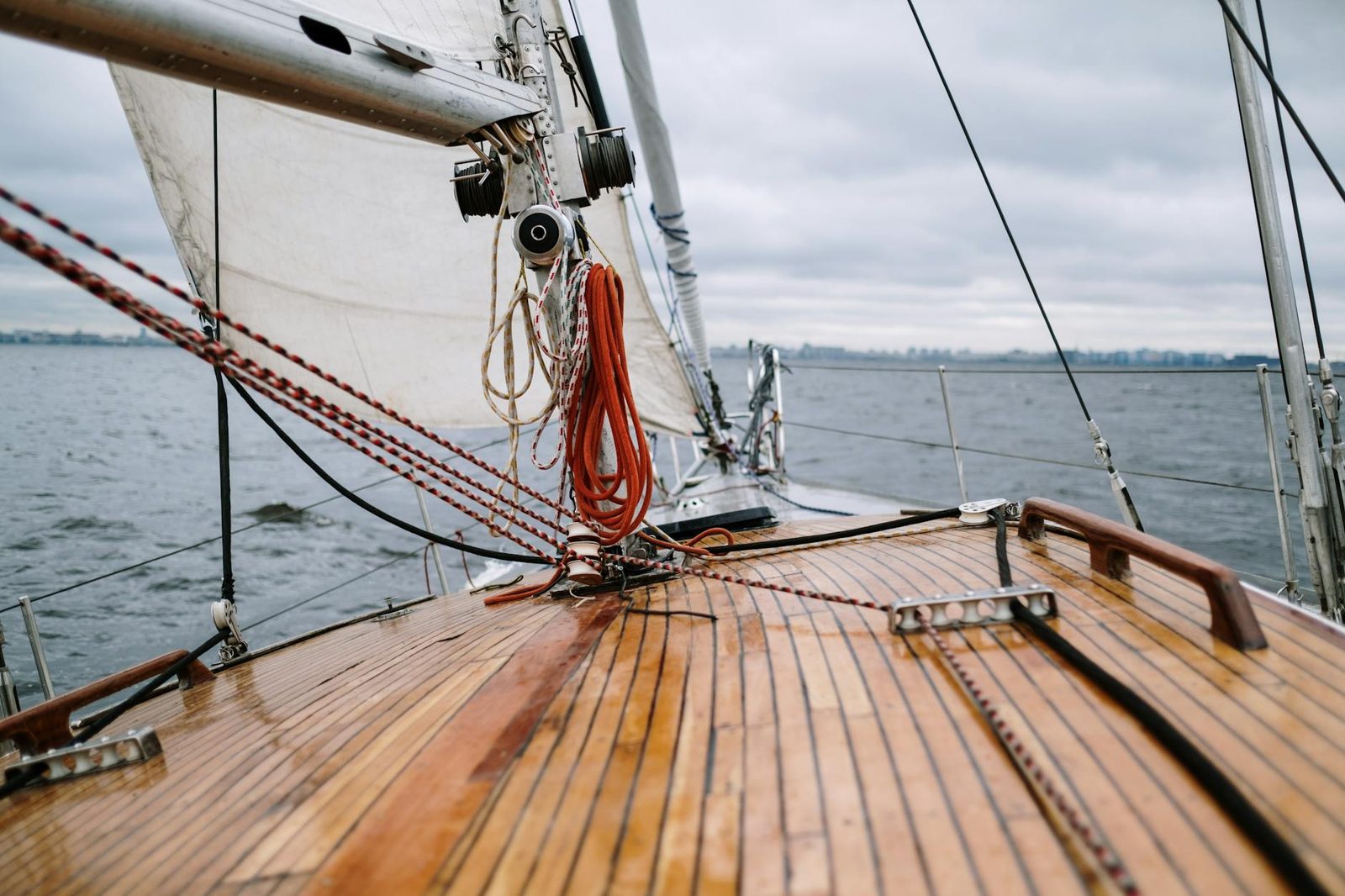
Deck work is genuinely physical. A typical deck day involves a lot of bending, lifting, kneeling, and working in the sun. You need to be comfortable working at height (bosun's chair, working aloft on mast or rigging) and working in and around water.
You don't need to be an athlete, but you do need reasonable fitness and no serious physical limitations. The ENG1 medical will confirm your fitness for sea service — it's worth knowing what's tested in advance (see our ENG1 guide).
Swimming ability is important, though it's rarely formally tested at entry level. Being comfortable in open water is more important than having a racing technique.
Qualifications needed
Mandatory
STCW Basic Safety Training — Exactly the same requirement as interior crew. The 5-day safety course is mandatory for everyone on a commercial vessel. See our STCW guide for the full breakdown.
ENG1 Medical Certificate — Seafarer fitness medical, valid 2 years. See our ENG1 guide.
Strongly recommended for deck
VHF Radio Licence (Short Range Certificate / SRC) — You'll use VHF radio from day one on a yacht, and on many vessels you legally need this qualification to operate it. The SRC course is typically 1 day and costs around £100-150. The RYA run well-regarded SRC courses.
RYA Powerboat Level 2 — See the next section.
RYA Powerboat Level 2 — worth doing?
Yes. This is one of the most cost-effective qualifications you can add as a junior deckhand. Here's why:
On almost every superyacht, tenders are driven by deck crew. Getting guests ashore safely, recovering them from the water, and handling the tender in rough conditions are all deck crew responsibilities. The RYA Powerboat Level 2 (PBL2) gives you the formal training and certification to drive powerboats up to 10m.
The course is typically 2 days and costs approximately £200-350. Combined with the SRC radio licence, it's about £350-500 all in — and it immediately makes you more employable as a junior deckhand because it means captains and bosuns can put you to work on the tender from day one.
See our full RYA courses guide for all the relevant options.
A day in the life of a deckhand
07:00 — Up, crew breakfast. Check daily schedule with bosun. Weather briefing for tender ops if guests are crossing to shore.
07:30 — Morning wash-down. The yacht has been sitting overnight and the decks need hosing, windows cleaned, stainless dried off. Every morning, without fail.
09:00 — Maintenance time. Varnish touch-ups, teak oiling, stainless polishing, whatever's on the maintenance list. Bosun directs.
11:00 — Tender prep. Fuel, safety gear, engine checks. Guests are going ashore at 11:30.
11:30 — Tender runs. Back and forth between yacht and shore as needed. You're the taxi and you need to be precise, professional, and safe in every condition.
13:00 — Crew lunch. Brief break.
14:00 — Water toys deployment. Jet skis in the water, paddleboards inflated, guest safety briefings. Supervision of water toy use.
17:00 — Water toys recovered and stowed. Deck hosed again after a day of use. Anchor area checked, lines coiled.
18:00 — Sunset watch if at anchor. Monitor weather, watch the anchor, keep an eye on the horizon. On a vessel underway, you're on watch rotations.
22:00 — Night watch handover. On passage, you might do 3-4 hour watches overnight.
Career path: deckhand to captain
Deck is the only department with a direct line to the captain's chair, and it's one of the longest and most qualification-intensive paths in professional employment. But it's also an extraordinary career.
| Role | Typical Timeline | Key Certifications |
|---|---|---|
| Junior Deckhand | Season 1 | STCW, ENG1, RYA PBL2 |
| Deckhand | Season 2–3 | VHF/SRC, growing sea time |
| Bosun | Season 3–5 | RYA Day Skipper or equivalent sea time |
| Officer of the Watch (OOW) | Season 5–8 | MCA OOW 500gt or RYA Yachtmaster |
| Chief Mate | Season 8–12 | MCA Chief Mate 3000gt |
| Captain | Season 10–15+ | MCA Master 3000gt (or Master 500gt for smaller vessels) |
The sea time requirements at each stage are significant. The MCA (Maritime and Coastguard Agency) sets minimum sea time requirements for each certification, and you're accumulating this in your logbook from day one. Keep your logbook updated accurately — it's your professional record.
For the full captain's path, see our guide to becoming a yacht captain.
Deckhand gear and reading
Before you start, invest in a few essentials. Good deck shoes, waterproof gloves, and reference books will pay for themselves on day one.
Affiliate disclosure: We recommend products we've tested. Amazon affiliate links support this site at no extra cost to you.
- Non-marking deck shoes — Essential for superyachts. Sperry or Timberland are industry standard
- Work gloves — Waterproof, cut-resistant gloves for line handling and maintenance
- Seamanship handbook — A pocket reference for knots, procedures, and terminology
- Rope and knot book — Master the basics of line work before your first season